
What do you need on an operation theatre equipment list to set up a fully equipped operation theatre? Most of us think of the surgical table and the lights first, and that makes sense, because they’re what you see when you walk in. But they are only a small part of the room. Some items help the surgeons do their work, and some simply keep the patient safe until the operation is over.
If you’re building a new operation theatre, or upgrading an old one, the equipment you pick matters a lot. Here are seven items every fully equipped operation theatre needs.
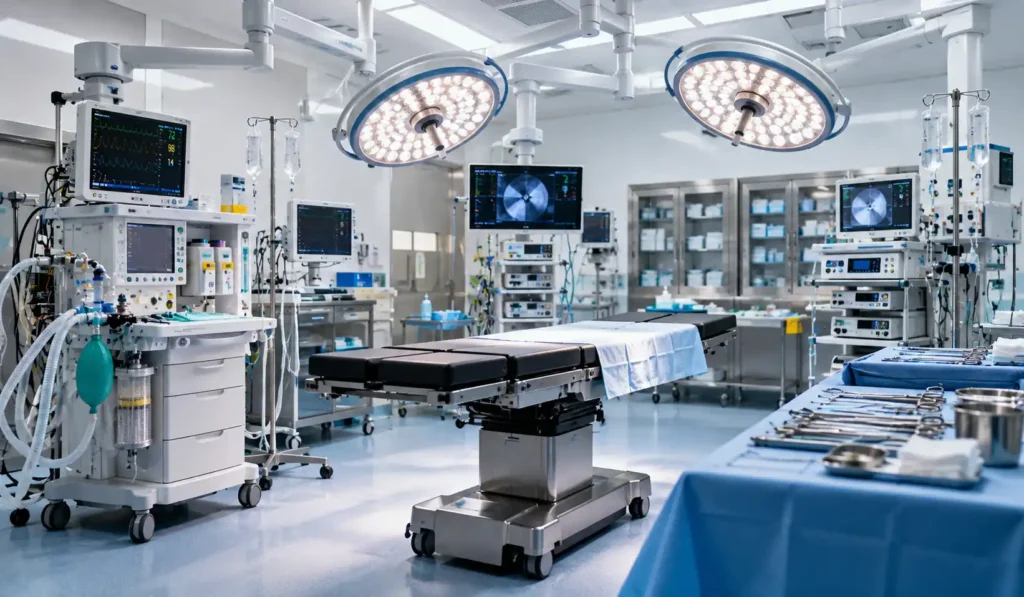
1. Operating Table
If there’s one must-have OT equipment item that never gets ignored, it’s the operating table. It has to hold the patient steady, and your team also needs to move that patient into the right position. That’s a lot to ask from one piece of equipment.
Most modern tables let you change the height and tilt the backrest, and some have more positions on top of that. If you do different kinds of surgery, you may need extra attachments for different positions.
When you compare tables, don’t stop at the price. Think about daily use. Does it stay steady? How much weight can it take? Is it easy to clean after every case, and does it move smoothly when your team adjusts it?
2. Surgical Lights
Surgeons need to see clearly, and the light has to help with that. A good surgical light shines bright on the spot where they’re working and doesn’t throw shadows over it.
The team will move the lights during surgery, so they should be easy to adjust. Many lights also let you change the brightness and position, which is handy when you do different types of surgery.
Before you buy, add it to your OT equipment checklist UAE and ask how the lights are installed and who will maintain them. You want lights that work the same way every day and don’t get in your team’s way.
3. Anaesthesia Machine
Any surgery under general anaesthesia needs this machine. It controls the anaesthetic gases, and it breathes for the patient while they’re under.
Most of them now come as a full workstation: ventilator, breathing system, gas monitor, alarms. Which one meets your operation theatre setup requirements depends on what your surgeons actually do. A day-care surgery centre and a hospital doing heart operations won’t need the same thing.
If it fails halfway through an operation, there’s no quick fix. So find out who services it, and how fast they can reach you. A good operation theatre equipment supplier in UAE will answer this clearly before you buy.
4. Patient Monitoring System
The monitor is what lets you keep an eye on your patient for the whole operation. Heart rate, blood pressure, oxygen, breathing, all there on one screen. Not every surgery needs more than that. If your patient is high risk, though, ask the supplier what else it can track.
Then check where the screen sits. Can your anaesthetist read it from their usual spot? It sounds like a small thing, but it’s the one people notice every single day.
5. Electrosurgical Unit
An ESU, short for electrosurgical unit, is the machine surgeons use to cut tissue or stop bleeding with electrical energy. Some people call it a diathermy machine. Most theatres have one on their operation theatre equipment list.
Settings and accessories change from one surgery to another, so choose yours based on the work your theatre does. Ask what’s included in the price.
Training is a big part of this one. Make sure your staff know how to use it. Also check that the electrodes and return plates match the unit, because parts that don’t fit can cause real trouble.
6. Surgical Suction System
During surgery, blood and other fluids keep collecting where the surgeon is working. If nobody clears it, they can’t see what they’re doing. That’s the job of the suction system.
You can set it up as a central suction, a portable unit, or both. Plenty of surgical theatre equipment Dubai setups keep a portable one around as a backup. Whichever you choose, it has to keep pulling at the same strength for the whole operation, not just the first half hour.
Then look at the parts nobody talks about: the collection containers, the tubing and the cleaning routine. Ask how big the containers are, how often they need emptying, and how long it takes to clean the whole thing between cases.
7. Defibrillator and Emergency Equipment
No matter how well a surgery is planned, things can still go wrong. If a patient’s heart stops, your staff won’t have time to go looking for a defibrillator. So keep one inside or right next to the theatre, where any trained person can get to it fast. Keep the other emergency supplies on your operation theatre equipment list close too, matched to the surgeries you do.
Then make checking a habit. A defibrillator with a dead battery is just a heavy box. Look at the battery, the cables and the pads on the schedule the manufacturer gives you, and replace anything that’s used up or past its date.
FAQ
Most theatres need all of them, but the exact type depends on the surgeries you do. A small day-care centre and a big hospital won’t buy the same machines.
It depends on your theatre. Some use central suction, some use a portable one, and many keep both.
Check it on the schedule the manufacturer gives you. Look at the battery, cables and pads, and replace anything that’s used up.
Conclusion
An operation theatre works because everything in it works together. The table, the lights, the anaesthesia machine, the monitor, the ESU, the suction and the emergency equipment each do one job, and a weak link in any of them affects the whole surgery. So don’t choose each item on its own. Think about the surgeries you do, ask whether the pieces fit together, and find out who will help you when something breaks down. The best equipment is the kind your team never has to worry about.
If you’d like help planning your setup, Modern Pulses Trading LLC is happy to talk it through with you.